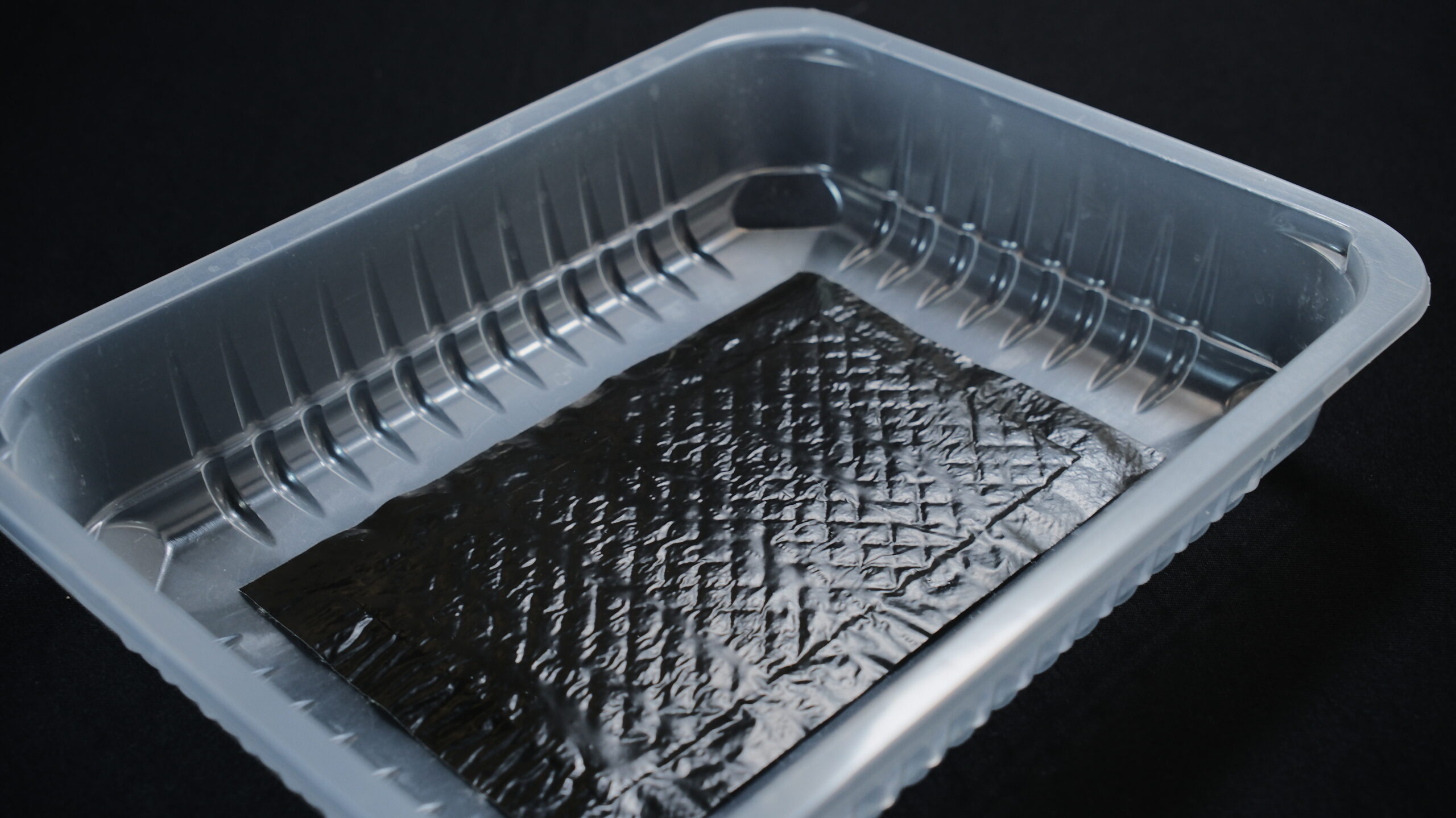
How Absorbent Pad Technology Works
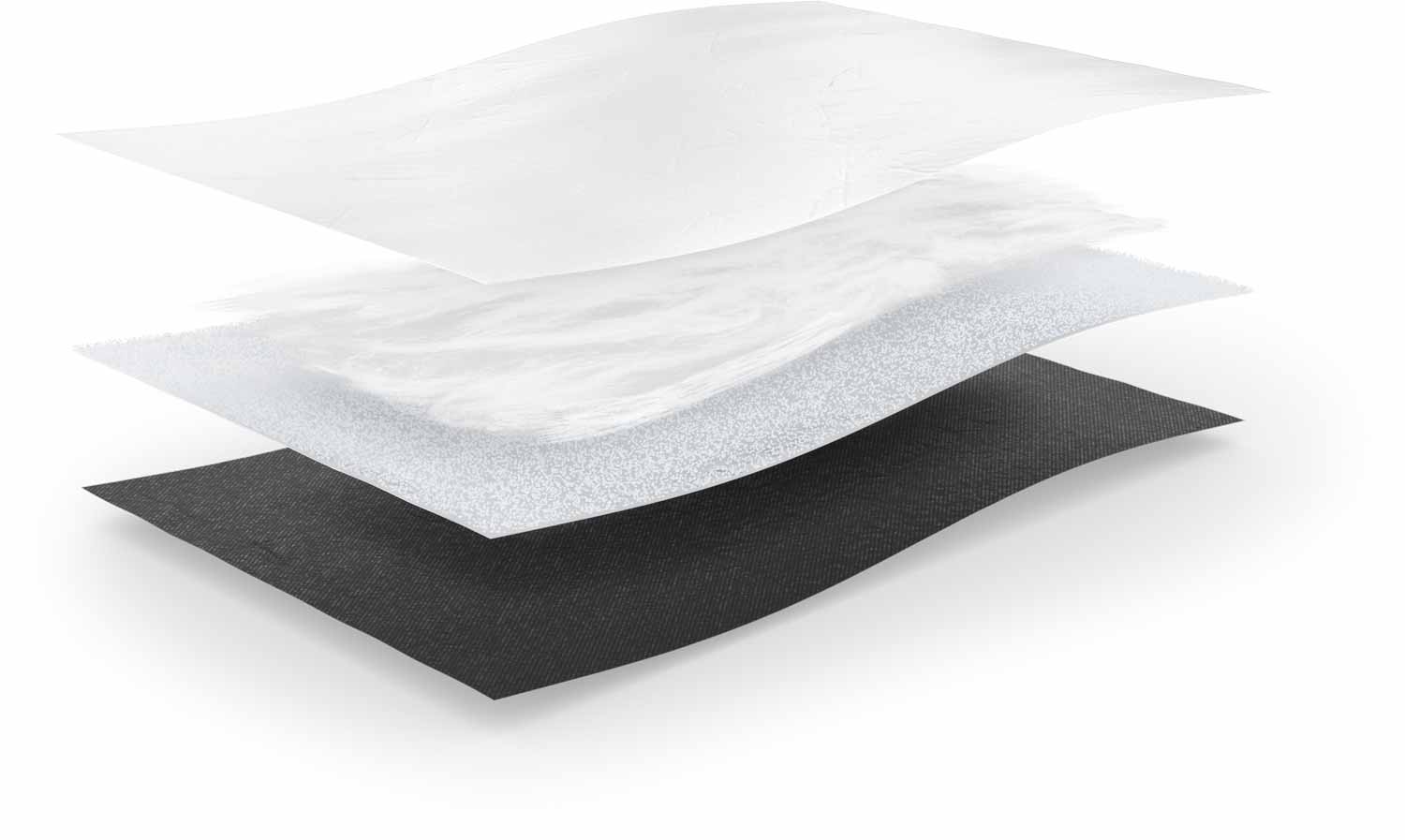
An absorbent pad looks like a simple sheet, but it is a three-layer structure and each layer has a distinct job. Together they move liquid off the product, lock it inside the pad, and stop it escaping again.
The three layers
The top layer is a perforated film. It faces the product and lets liquid pass through in one direction only, so the surface that touches the food stays dry to the touch.
The core does the absorbing. It is made from cellulose, or from cellulose combined with a super absorbent polymer where a higher capacity is needed. The core takes the liquid up quickly and holds it, so it does not run back out when the pack is tilted or handled.
The bottom layer is an impermeable film. It closes the pad off underneath so nothing reaches the tray.
Why the direction matters
Because the top passes liquid and the bottom blocks it, the pad works as a one-way trap. Liquid moves in from the product side, spreads through the core, and stays there. The product rests on a dry surface for as long as the pad has capacity left.
Choosing a capacity
Capacity is the number that matters most in specification. A pad is rated either per pad, in millilitres, or per square metre, and the right rating depends on the product, the pack size and how long the pack has to hold before it is sold.
Under-specify and the pad saturates before the end of shelf life; over-specify and you are paying for absorbency you never use. Axorbia produces pads from 40 ml per pad up to 10,000 ml/m², so the pad can be matched to the line rather than the line to the pad.
Sealing matters too. A pad sealed on four sides keeps the core fully contained, while an open-edge pad absorbs faster. Which one suits depends on the product and the packing method.
Related Posts
The Cold Chain in Food Shipping, and Where Ice Packs Fit
The Advantages of Using Absorbent Pads in Meat Packaging